NASA Astronomy Picture of the Day Features M42, the Great Nebula in Orion
World Pulse Editorial — The WORLD PULSE editorial team covers international news, business, technology, AI, science, sport, culture and other subjects of public interest. The desk applies source attribution, editorial checks, context and corrections standards across the publication.
The byline identifies the newsroom author or editorial team responsible for this publication. Where the story is based on external reporting, those sources are identified below.
AI-assisted production may have been used in the drafting workflow. Source verification, attribution and editorial review remain the responsibility of WORLD PULSE.
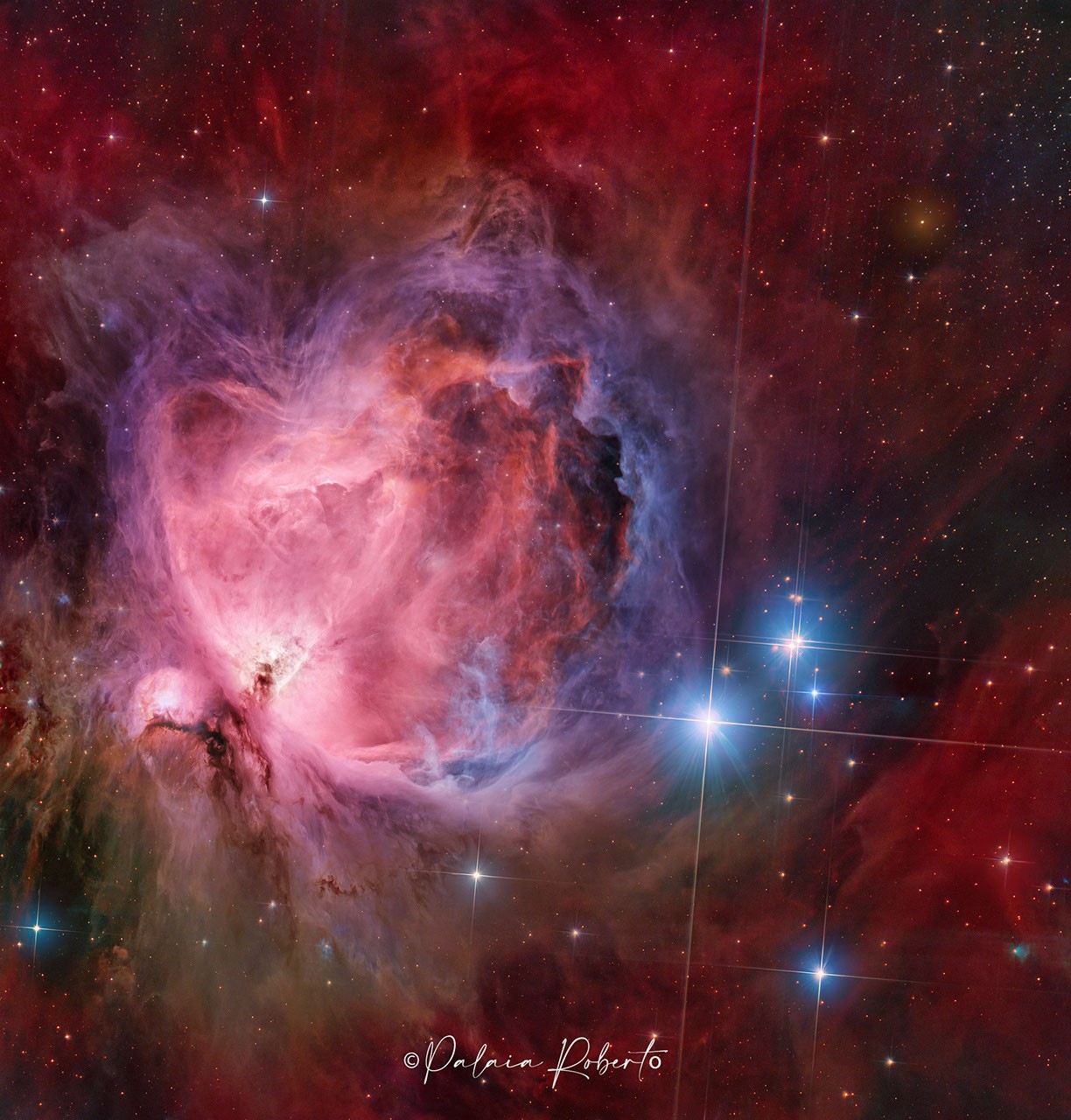
NASA’s Astronomy Picture of the Day for October 26, 2026, presents a deep-space look at M42, the Great Nebula in Orion, a famed star-forming region located 1,500 light-years from Earth.

On October 26, 2026, NASA’s Astronomy Picture of the Day (APOD) project showcased M42, commonly known as the Great Nebula in Orion. According to the reporting source, this immense star-forming region is recognized as one of the most famous astronomical nebulas in the sky. It is situated approximately 1,500 light-years away from Earth and resides in the same spiral arm of our galaxy as the Sun.
The featured deep-space image, captured by Roberto Palaia, employs assigned colors to highlight emissions from hydrogen. These visuals reveal intricate wisps and sheets of dust and gas that characterize the structure, which spans about 40 light-years across. For observers on Earth, the Great Nebula in Orion is identifiable to the unaided eye near the belt of the Orion constellation, which consists of three prominent stars.
Astronomers describe the Orion Nebula as a hub of stellar activity. The region houses the Trapezium, a bright open cluster of stars, and contains numerous stellar nurseries. Within these nurseries, researchers observe dense hydrogen gas, hot young stars, proplyds, and stellar jets that expel material at high velocities. Glowing gas surrounds these young stars at the edge of an immense interstellar molecular cloud.
The APOD entry was compiled by a team of authors and editors, including Robert Nemiroff, Jerry Bonnell, Cecilia Chirenti, and Keighley Rockcliffe. The service is provided through the Astrophysics Science Division at NASA's Goddard Space Flight Center, in collaboration with NASA Science Activation and Michigan Technological University. The inclusion of M42 in the daily feature highlights the ongoing scientific interest in this nearby center of starbirth.
Topic coverage
Follow recurring subjects across the WORLD PULSE newsroom.
Topics
Reader interest
Most read
 UKKelsey Parker Welcomes New Baby Named River Following Heartbreaking Stillbirth
 AIOpenAI Discloses New Safety Issues and Outlines Plan for Tracking Incidents
 SportsAsian Games Facing Accommodation Crisis and Weather Disruptions in Nagoya, Japan
More from the newsroom
Latest stories
 SportsMilwaukee Brewers Secure First World Series Title with Game 5 Victory Over Rays
 BusinessSunshine Buns Secures $7 Million to Expand Frozen Cinnamon Roll Sales Nationwide
 WorldPalestinians in Gaza and West Bank voice deep skepticism toward Israeli election
 WorldKing Charles III Faces Growing Demands for Reparations During Caribbean Tour
 SportsFantasy Basketball Risers and Fallers: Evaluating Early-Season Player Performance
 AsiaKylian Mbappé Loses Chinese Sponsorships After Comments Regarding Mao Zedong
 World68 Dead After High-Speed Trains Collide Near Toledo, Spain
 TechnologyAnthropic S-1 Filing Details Financial Losses, AI Security Risks and Infrastructure Hurdles
Research & context
Explore WORLD PULSE reference pages
Use these newsroom indexes to follow related coverage, review publication timelines and explore how WORLD PULSE reporting is organized.
Sources & attribution
The external reports, announcements or publications used to inform this article are listed here for attribution and reader context. A source link does not mean WORLD PULSE independently endorses every claim in that source.
Questions about sourcing, attribution or corrections: contact the newsroom.