As Trump Challenges Reparations, Slavery Descendants Seek Future Redress
World Pulse Editorial — The WORLD PULSE editorial team covers international news, business, technology, AI, science, sport, culture and other subjects of public interest. The desk applies source attribution, editorial checks, context and corrections standards across the publication.
The byline identifies the newsroom author or editorial team responsible for this publication. Where the story is based on external reporting, those sources are identified below.
AI-assisted production may have been used in the drafting workflow. Source verification, attribution and editorial review remain the responsibility of WORLD PULSE.

Municipal reparations efforts face a growing federal challenge as the Trump administration takes legal action against Evanston, Illinois, while institutions nationwide rethink race-based programs.
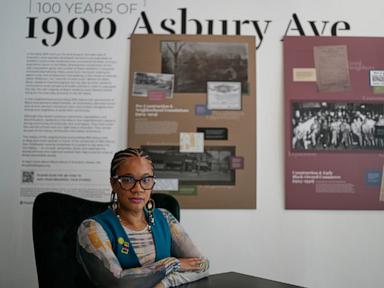
As the United States reaches its 250th anniversary, the movement to provide reparations for the legacy of slavery faces a formidable legal and political hurdle: the administration of President Donald Trump. While advocates like Robin Rue Simmons, chair of Evanston’s Reparations Committee, work to replicate municipal housing programs across more than 100 communities, the federal government has moved to dismantle these efforts.
According to reporting by The Associated Press, the U.S. Department of Justice has received federal court permission to intervene in a lawsuit against Evanston, Illinois. The litigation, originally filed by Judicial Watch, challenges a program that provides housing grants to Black residents whose families were harmed by discriminatory policies. The Justice Department, led by the current administration’s interpretation of federal law, argues that such race-based government benefit programs violate the 14th Amendment’s equal protection clause and the Fair Housing Act. "Those implementing these programs do so in violation of federal law and the federal government has an obligation to stop them," DOJ spokeswoman Kiersten Pels stated.
This legal action is part of a broader federal campaign against diversity, equity, and inclusion (DEI) initiatives. President Trump has been vocal in his opposition, telling supporters in September that reparations programs are "going nowhere" and accusing proponents of attempting to "steal your money." This hostility has had a cooling effect on institutions nationwide. At Harvard University, for example, a project aimed at identifying the descendants of people enslaved by past university leaders was effectively shuttered when the school fired the entire research team shortly after the administration signed an anti-DEI order in January 2025. Other colleges have similarly paused or abandoned new scholarship initiatives, citing fears that such programs could jeopardize federal research funding.
Despite these barriers, some private institutions continue their work. The Virginia Theological Seminary maintains an endowment that provides annual cash payments to descendants of those who labored on its campus. Similarly, Georgetown University continues to offer admission consideration for descendants of people sold by the school’s Jesuit priests. For recipients like Joe Martin, a 46-year-old participant in the Evanston program, these initiatives remain vital for acknowledging the history of chattel slavery and the systemic racism that prevented Black families from building wealth. Sociologist Marcus Anthony Hunter of UCLA notes that these programs, even when modest, provide essential acknowledgment and responsibility for historical crimes.
Globally, the conversation remains polarized. In March, the U.N. General Assembly declared the trafficking of enslaved Africans "the gravest crime against humanity," a resolution supported by more than 120 countries, though the U.S., Argentina, and Israel voted against it. Back in Evanston, Rue Simmons remains committed, calling federal redress her "collective north star." As the legal battle unfolds, the future of municipal-level reparations hangs in the balance, caught between growing local momentum and firm federal opposition.
Topic coverage
Follow recurring subjects across the WORLD PULSE newsroom.
Topics
Reader interest
Most read
 UKKelsey Parker Welcomes New Baby Named River Following Heartbreaking Stillbirth
 AIOpenAI Discloses New Safety Issues and Outlines Plan for Tracking Incidents
 SportsAsian Games Facing Accommodation Crisis and Weather Disruptions in Nagoya, Japan
More from the newsroom
Latest stories
 SportsMilwaukee Brewers Secure First World Series Title with Game 5 Victory Over Rays
 BusinessSunshine Buns Secures $7 Million to Expand Frozen Cinnamon Roll Sales Nationwide
 WorldPalestinians in Gaza and West Bank voice deep skepticism toward Israeli election
 WorldKing Charles III Faces Growing Demands for Reparations During Caribbean Tour
 SportsFantasy Basketball Risers and Fallers: Evaluating Early-Season Player Performance
 AsiaKylian Mbappé Loses Chinese Sponsorships After Comments Regarding Mao Zedong
 World68 Dead After High-Speed Trains Collide Near Toledo, Spain
 TechnologyAnthropic S-1 Filing Details Financial Losses, AI Security Risks and Infrastructure Hurdles
Research & context
Explore WORLD PULSE reference pages
Use these newsroom indexes to follow related coverage, review publication timelines and explore how WORLD PULSE reporting is organized.
Sources & attribution
The external reports, announcements or publications used to inform this article are listed here for attribution and reader context. A source link does not mean WORLD PULSE independently endorses every claim in that source.
Questions about sourcing, attribution or corrections: contact the newsroom.